

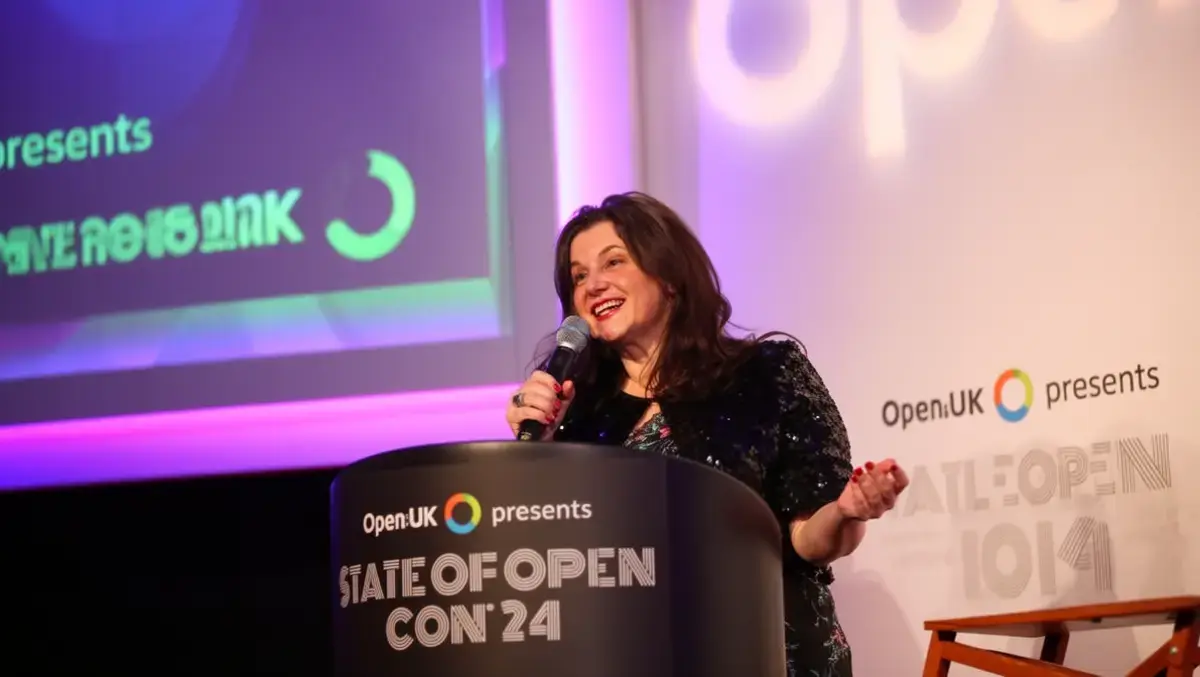
OpenUK unveils speakers for Edinburgh open source AI event
Fri, 5th Jun 2026
OpenUK has announced the speakers for its first State of Open Con On The Road event in Edinburgh, a conference focused on open source, software and AI.
The event will examine how openness can support secure and ethical AI. Planned sessions will cover the UK's digital and AI infrastructure, security issues around agentic AI, the influence of Mythos, and sovereignty across the digital and AI stack.
The line-up includes figures from industry, academia, government and legal practice, with several speakers based in Scotland or working from Edinburgh. The event is intended to bring together people from across the open technology sector as debate over AI governance, infrastructure and control gathers pace.
Scottish speakers include Amanda Brock, Chief Executive Officer of OpenUK; Adrian Mouat, Developer Relations at Chainguard; Professor Adrian Jackson, Director of Research at EPCC; Mike McQuaid, Chief Technology and Product Officer at Administrate; Iain Mitchell KC, Chairman of the Scottish Society for Computers & Law; Chris Yiu, Director of Public Policy at Meta; and Tom Wilkinson, Chief Data Officer at the Scottish Government.
International speakers include Anastasia Stasenko, Co-Founder of Pleias; Jean-Baptiste Kempf, Chief Executive Officer of Kyber and Founder of VideoLAN; Keith Bergelt, Chief Executive Officer of Open Invention Network; Andrew Martin, Chief Executive Officer of Control Plane; and Liz Rice, Chief Open Source Officer at Isovalent.
The event reflects OpenUK's wider effort to place open source and AI policy in the same conversation, particularly as governments and companies assess how to build AI systems that are secure, accountable and less dependent on a small number of providers.
Policy and infrastructure
Questions of sovereignty and infrastructure have become more prominent in the UK as policymakers weigh where compute, data and model development should sit, and who should control them. By addressing those topics alongside security and legal issues, the Edinburgh event is likely to draw interest from both technical and policy audiences.
Several speakers work directly on those concerns. Professor Jackson leads research at EPCC, the supercomputing centre in Edinburgh, while Wilkinson oversees data and technology strategy in the Scottish Government. Yiu leads public policy work in Europe for Meta, and Mitchell is a long-standing figure in computer law.
The programme also highlights security's role in the open source AI debate. Mouat, Martin and Rice are all closely associated with software and container security, while Bergelt leads an organisation focused on protecting Linux and open source software from patent disputes.
OpenUK said the speaker list demonstrates the depth of technology talent connected to Scotland, including people who have built international careers while remaining based there or maintaining close ties to the country.
In comments released with the announcement, Brock highlighted the mix of local and international participants.
"This event brings together leading figures in AI and technology from around the world alongside those international leaders based out of Scotland. When it comes to AI, Scotland has talent. That talent will change the world around AI and open source. These individuals collaborate globally and have built international careers at the cutting edge of AI, with contributions from the ground up from people such as Nick Jones, Vice President of Engineering at NScale, hailed as the UK's first hyperscaler, and Adrian Mouat, who works on AI security from Edinburgh for US cybersecurity company Chainguard," said Amanda Brock, Chief Executive Officer of OpenUK.
Scottish talent
Her comments place the event in the context of Scotland's technology workforce, particularly in open source software, infrastructure and AI. Edinburgh has long had a strong academic and financial technology base, and sector advocates argue that AI offers a commercial opening if local expertise can be linked to investment and a long-term industrial strategy.
That argument also underpins the event's focus on jobs, access and openness. Some in the sector have promoted open source AI as a way to spread development more widely, though debate continues over security, oversight, and the balance between open access and commercial control.
Brock addressed that point in a second comment.
"With so much investment in AI taking place, and Scotland's talent, AI offers a fiscal opportunity. Open source AI allows access to innovation and builds jobs around this. The people speaking at this event are part of an international technology community transcending borders. They will be amongst those delivering the security, sovereignty and infrastructure that will be necessary for us all," said Brock.
OpenUK describes itself as a non-profit organisation focused on the UK's open technology sector, including open source software, open source hardware, open data, open standards and AI openness. The group has recently expanded its work on AI policy and international collaboration through its sister organisation, OpenHQ.
The Edinburgh programme brings together many of the issues shaping the UK debate on AI: where infrastructure should be built, how systems should be secured, what legal and policy frameworks are needed, and whether open models can play a bigger role.
Chris Yiu, Director of Public Policy at Meta, leads the company's policy work in Europe from his home in Edinburgh.