DMARC stories
Phishing emails can still slip into Microsoft 365 mailboxes when attackers leave the SMTP envelope sender blank, ReliaQuest has found.
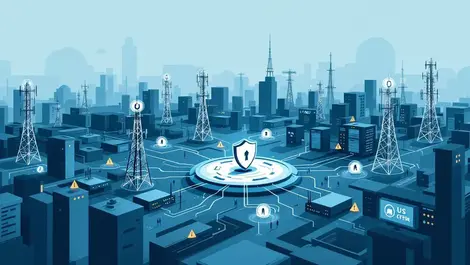
Smaller operators are carrying much of the danger as a new study finds 66% of assessed US telecoms fall into an elevated risk band.
With most operators exposed to basic flaws, the paper warns telecom networks could face the same low-effort intrusions seen in US water systems.
Ransomware groups are keeping up pressure on smaller rivals, with mid-market firms still making up 73% of victims across North America and Europe.
Strict compliance has helped banks and insurers outperform retail on inbox placement, as cleaner data now drives better delivery rates.
Sensitive physics and engineering research at US and Canadian universities may have been exposed after hackers used Roundcube flaws to enter mail servers.
The update gives service providers new AI controls and a simpler billing model as demand grows for outsourced security governance.
As AI use spreads, MSPs can now monitor and govern employees' interactions with AI tools through Check Point's expanded platform.
Verified access to Anthropic's restricted AI tools could help IRONSCALES test email defences against more realistic phishing and impersonation attacks.
More than half of North American SMBs lack basic email protections, leaving them more exposed to phishing, impersonation and fraud than UK peers.
More than 12,000 inboxes were exposed as the kit used to bypass multi-factor authentication and sustain account access was taken offline.
Irish SMEs will get support to tackle weak website, email and domain settings as cyber risk erodes trust and productivity.
Microsoft security teams can now ingest email authentication signals in one place, helping spot phishing and spoofing sooner during investigations.
Spoofed emails could still reach public servants and citizens, as 50% of more than 200 New Zealand agencies have not met the DMARC standard.
Most of Southeast Asia's biggest firms still leave customers exposed to spoofed emails, with only 17% enforcing the strictest DMARC setting.
A growing share of US adults doubt business emails as AI makes polished messages easier to fake, a survey found.
Basic security gaps are leaving nearly two-thirds of analysed US telecoms providers in an elevated cyber risk band, the report says.
Most customers still face avoidable phishing risk, as 59% of Australian banks lack the strict DMARC setting that blocks spoofed emails.
Lower inbox visibility is making vital notices harder to reach New Zealanders, even as those opened are drawing more clicks.
Targeted email scams are pushing payment redirection fraud losses higher as Australian firms lose more than AUD $166.8 million.