Security stories
Security fears and a skills gap are holding back UK small firms, even as nearly half now use AI and more plan to adopt it.
The upgrade aims to ease London dependence for Midlands firms needing low-latency AI capacity, security and resilience.
Sensitive document work can now stay offline as Foxit's latest PDF editor runs supported AI tasks on-device for regulated sectors.
The grants will fund tools to ease eBPF debugging and improve cloud isolation, as academic interest in Linux systems research grows.
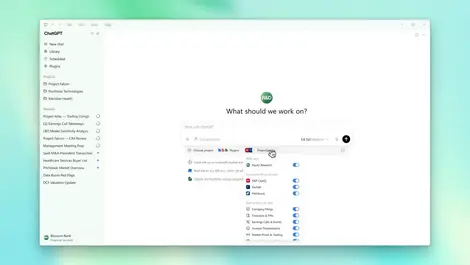
Financial institutions will gain access to licensed market data and governance tools as OpenAI targets research, modelling and client documents.
Daimler Truck's manufacturing operations will get earlier warnings of IT faults as NTT Data adds AI monitoring and automation across its global infrastructure.
Enterprises get new governance, monitoring and multi-tenant controls as Red Hat targets safer, scalable AI use beyond pilot projects.
Health-tracking rivals face pressure as the new model adds a daily readiness score, more frequent sensing and AI-powered audio tools.
Defence contractors and government buyers are weighing a longer-endurance drone that Iveda says can support surveillance, safety and response work.
Developers can now build their own multi-agent control planes with built-in logging, sandboxing and dashboard monitoring for enterprise workflows.
The ranking bolsters SUSE's pitch to businesses wanting one control plane for containers, virtual machines and AI workloads across mixed environments.
The arrangement gives the Australian neocloud a single control layer to manage AI infrastructure and support up to 150,000 GPUs.
Existing customers get six years of support as Cloudera shifts new AI and analytics workloads to a Hadoop-free platform due in November.
Finance teams can now approve claims and query spending inside Claude and ChatGPT, as Rydoo's connector cuts switching between systems.
Embedded systems now make up nearly a third of the electronics market as edge AI shifts design priorities towards security and software.
Firms launching wallet services could cut launch delays as the pre-integrated setup joins payments, issuing, identity and ledger tools.
Nearly 60% of officials say workforce gaps are slowing deployments, as security worries and fragmented systems also hold back progress.
Shared AI infrastructure will help the insurer roll out agents faster, while keeping oversight tight across its 52-country network.
The staged rollout aims to smooth the merger of two legacy systems for 750,000 customers as the bank overhauls online banking.
Fans were spared buffering as Seven used New Relic to scale 7plus Sport for AFL demand and meet strict geotargeting rules.