

Europe's communications market is fragmenting - and that's exactly the opportunity
Mon, 13th Jul 2026
For years, the narrative around European communications has been one of scale. Think of pan-European coverage, standardised services, and consistency across borders.
But the reality on the ground is far more complex. That complexity is increasingly becoming about shaping how providers need to evolve.
Building a truly pan-European communications business means looking at each market in isolation. Each country has its own unique differences, with each one at a different moment in time in terms of digital transformation.
That tension between standardisation and localisation is at the heart of the next phase of growth for enterprise communications.
Shifting from national provider to multinational partner
Gamma Communications' own trajectory reflects a broader shift in the market. What began as a UK SME-focused business has been reshaped by the demands of larger, more complex organisations.
Implementing larger solutions for larger organisations created a new mindset. These larger businesses typically want a direct relationship with a service provider.
It forced a structural change and ultimately led to the creation of a dedicated enterprise capability. Creating a systems integrator within the Gamma Communications Group led to the delivery of highly scalable, digital and turnkey solutions to larger enterprises.
But the real inflection point came when those enterprise customers started asking a harder question: how do you support us globally?
Why 'pan-European' doesn't mean uniform
Expanding into Europe isn't simply about replicating a UK model. Different markets are progressing at different speeds, particularly when it comes to infrastructure.
In the UK, fibre deployment is almost done. Soon, organisations will have ubiquitous fibre coverage underpinning their digital transformations.
However, in a nation like Germany, they're behind on their own fibre rollout. This uneven maturity creates a challenge but also an opportunity for providers that can bridge those gaps.
That's why it's crucial to look at each market and plan accordingly. Either consolidate or create a single solution that can basically deliver a customers' requirements across those markets.
In practice, that means building a portfolio that can flex across environments, rather than assuming a one-size-fits-all model.
The third digital revolution is already here
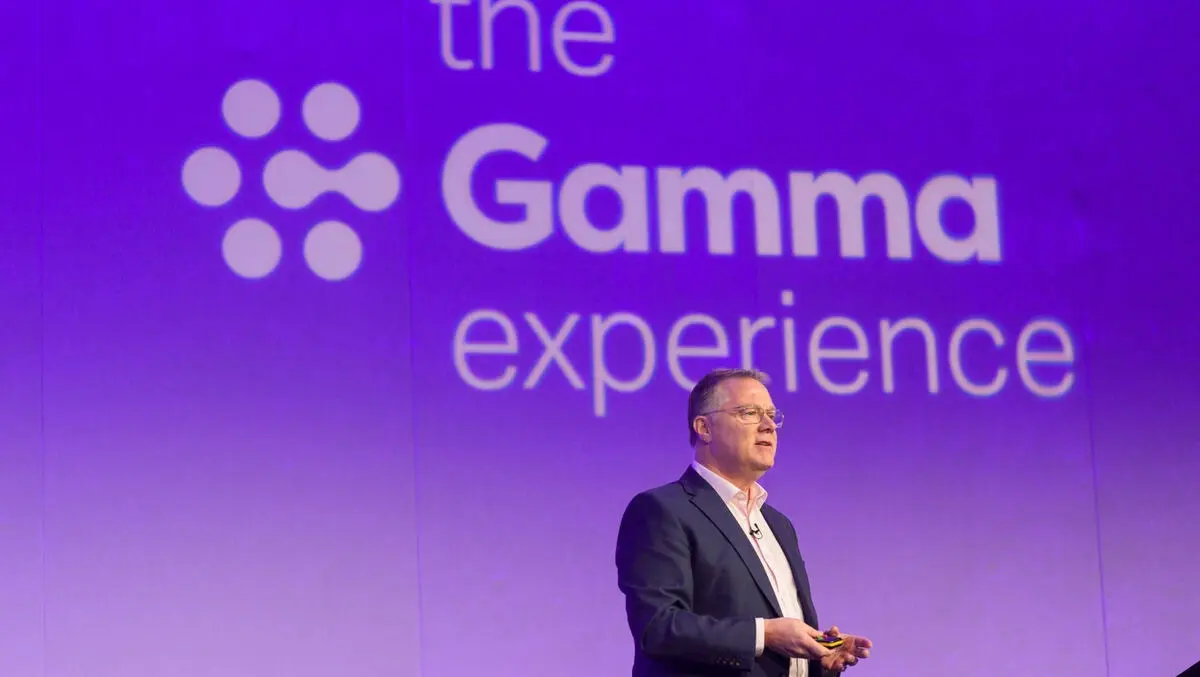
At the same time, AI is driving significant change. At our recent GX 2026 event, we spoke on how we've already entered the next digital revolution.
This time, the revolution is being defined by agentic AI capabilities. For enterprise customers, the conversation has already moved quickly from experimentation to execution.
Customers are looking for answers on what comes next. They need help on how best to deploy these solutions and achieve tangible outcomes. Operational efficiencies, better customer service – all achievable when done correctly.
It's clear how the focus is no longer on technology for its own sake, but on measurable outcomes. These customers want to be a better, more competitive organisation.
New risks are shaping the agenda
Alongside opportunity, new forms of risk are rising rapidly up the board-level agenda.
First, there's data sovereignty. Where data resides is a worldwide challenge and has now found itself at the top of the CIO agenda.
At the same time, cyber security concerns are evolving beyond traditional breach scenarios. There's more concern around deep fakes, and organisations are wondering how they protect themselves against this new AI-driven tactic.
These pressures are forcing organisations to rethink both their technology stacks and their operating models. Together, it puts a greater incentive on finding the right partner to work with.
Why partnerships are becoming non-negotiable
In an AI-driven market, even the largest providers cannot build everything themselves. Unless they have few billion pounds dedicated towards R&D, it can be difficult to create transformational AI solutions.
Instead, value is being created through integration, combining hyperscaler capability with provider-owned services. At Gamma, that's the route already being pursued.
These capabilities are being embedded into Gamma's won assets. That way, there's a whole layer of managed service and deployment services. Layering these services helps create a turnkey solution that allows organisations to focus on their core business.
Whether it's a high street retailer, merchant bank, or a large public sector organisation, they're having unnecessary complexity removed.
Ready to challenge
Taken together, these trends point to a communications market on the cusp of another major shift. The combination of AI, global demand, and regional complexity is creating the conditions for a new wave of challengers.
The next level of transformation is here. AI-powered tools from hyperscalers like Cisco and Microsoft will define what comes next. Embedding them into Gamma's core infrastructure will create a whole new wave of innovative, disruptive products.
The status quo in Europe is on the brink of change. Now is the time for organisations to seize the moment.
Learn more about how Gamma Communications can support pan-European expansion and deliver the outcomes that matter most.
You may also watch the accompanying video here.