

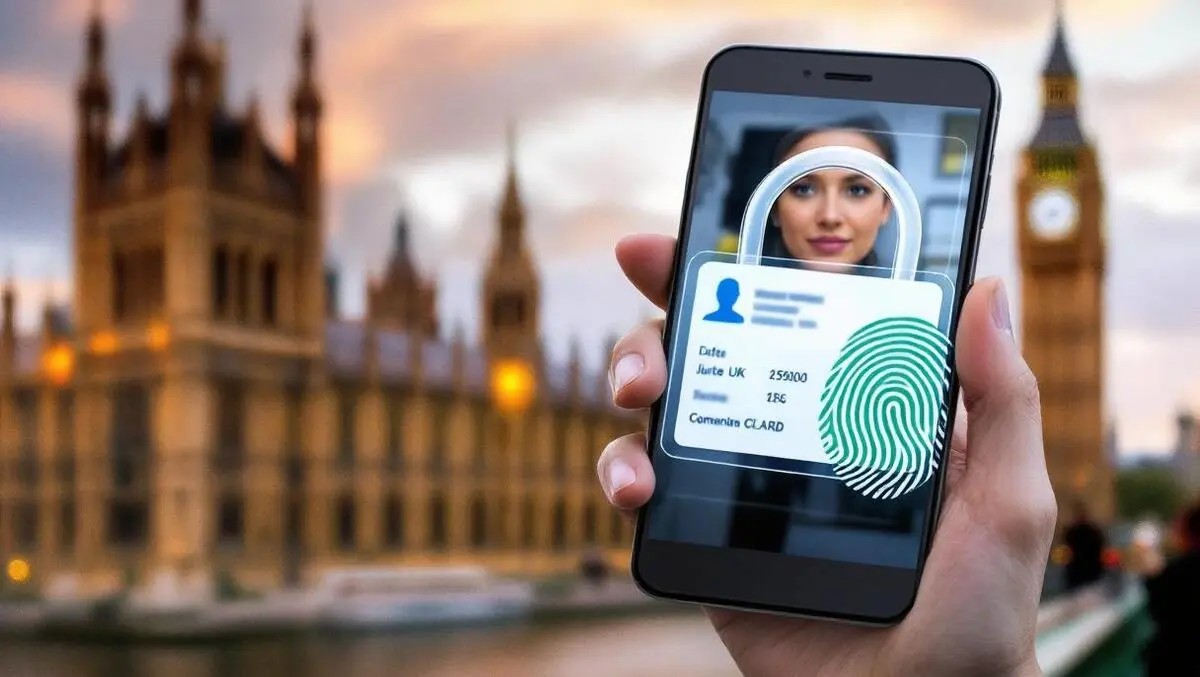
MPs to debate Labour's proposal for compulsory digital UK IDs
Tue, 28th Oct 2025
Members of Parliament are scheduled to debate Labour's proposal for introducing a compulsory digital ID system across the United Kingdom.
The policy initiative has prompted wide-ranging discussion about its potential impact on public security, privacy rights, and the practicalities of personal data protection. Technology and legal experts have expressed concerns and outlined potential benefits, highlighting the complexity of digital identity management in the modern context.
Security and privacy
Sam Peters, Chief Product Officer at data compliance specialist IO, emphasised that digital IDs can deliver increased efficiency and more robust identity verification. However, he also warned that creating a central repository of sensitive personal data would inherently attract attempts at unauthorised access. "Digital IDs offer opportunities for greater efficiency and stronger identity verification; however, they also centralise highly sensitive personal data, making them attractive targets for cyberattacks."
Peters argued that the long-term success of any digital ID initiative relies on establishing strong information security and privacy safeguards from the very beginning. He cautioned against treating privacy as an afterthought, stating that transparency into the government's data governance, storage, and access practices would be necessary to secure broad public support.
"The government must be transparent about data governance, storage, and access controls, clearly communicating to the public how personal information is managed and safeguarded. Adopting internationally recognised standards such as ISO 27001 and ISO 27701 would demonstrate a strong and consistent approach to data protection."
Peters advocated for strict adherence to privacy-by-design and security-by-design principles throughout development and implementation. He warned that insufficient accountability for the handling and sharing of identity data could undermine the intended benefits. Public confidence in how personal data is governed, he said, will be critical in determining the policy's effectiveness.
Historical and legal perspectives
The debate around state-run identity documents has long been emotive in the UK, with recurring references to themes of personal liberty and surveillance reminiscent of dystopian literature. Thomas Barrett, Partner for Data Protection and Privacy at cybersecurity consultancy CyXcel, argued that these anxieties are increasingly detached from the practical realities of modern data use.
Barrett pointed out that many UK residents already appear in large government-managed databases, such as those holding driving licence details, which are routinely accessed by authorities. He further contrasted existing governmental databases with the far more detailed profiles compiled by commercial entities, including telecommunications providers and loyalty card schemes.
"The fearmongering that the creation of a digital ID system would somehow be a watershed moment where liberty was irretrievably lost is misguided. Unless you live a hermit-like existence with virtually no presence on commercial or governmental systems... your data as a person is being regularly and routinely processed already to a significant extent."
Barrett suggested that, from a legal standpoint, a state-run digital identity system could offer greater protection than current alternatives managed by commercial organisations. Such a system would be fully subject to UK data protection legislation, civil liberties requirements, and other public law constraints, including the Human Rights Act. In contrast, private companies are not bound by the same obligations regarding individual privacy rights.
He also highlighted the current fragmentation in identity management as a security risk, arguing that the lack of a unified standard allows criminal actors greater opportunities for identity theft or fraud. He noted that repurposing documents such as driving licences or passports for identification in non-travel contexts can introduce additional, unintended risks.
Likely legal challenges
Barrett anticipated that the rollout of digital ID would encounter legal obstacles, primarily owing to the wide range of existing UK legal frameworks covering privacy, equality, and public law. He observed that most required safeguards are already enshrined in current law, notably data protection regulations and anti-discrimination rules under the Equalities Act.
Under such laws, any new digital ID system must address potential exclusions for those without digital access or with specific circumstances, ensuring equitable implementation. Barrett stated that the legislative process and subsequent administration of the scheme will be closely scrutinised and tested through the courts to uphold these standards.
He addressed the broader debate by urging a shift in focus from existential questions about digital ID to its implementation methods, stating that appropriate safeguards and accountability could offer a net benefit to citizens and government policy.