

Women leaders urge faster inclusion in engineering
Tue, 23rd Jun 2026
Senior women leaders across the technology and industrial sectors have urged companies to move faster on inclusion as the industry marks International Women in Engineering Day. They point to the persistent underrepresentation of women in engineering roles despite rising demand for skills in AI, digital infrastructure and sustainable industry.
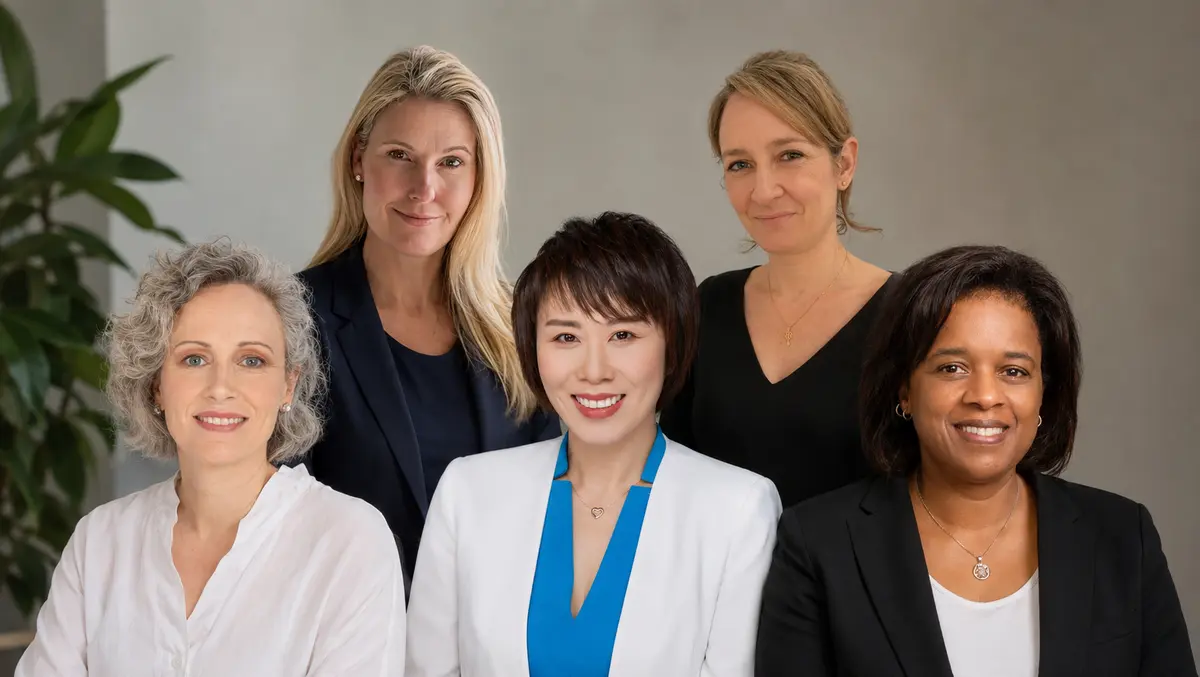
Executives from StorMagic, Leaseweb Canada, Syspro, AVEVA and Fluke raised concerns about the pace of change and its impact on innovation and competitiveness. Their comments reflect a shared view that engineering sits at the centre of many of the most complex economic and societal challenges.
At StorMagic, Chief Executive Officer Susan Odle described a workplace shaped by volatility and rapidly shifting priorities. She said this climate demands different forms of leadership and earlier intervention in education.
"The technology playing field is changing, and while technical knowledge remains vital, resilience has become equally important. Priorities are constantly shifting due to economic and geopolitical uncertainty, which is now a part of everyday work experience. Those who succeed in this environment need to develop chaos management skills. Individuals and organisations alike need to continue to move forward, even when facing constant change. Constant change is challenging, but this is where women make a real impact, as many of us have already had to adapt to environments that were not designed with us in mind. When I entered the workforce, it was transparently a man's world, and I had to make a conscious choice to become a part of it. While the nature of the challenge may have changed, the ability to persevere and succeed despite complexity is exactly how women will continue to shape the future of technology. It starts with early encouragement of women to enter technical industries, so that we can welcome more perspectives into the room. Young women need to be given the space to be curious so that they can discover their passion. Teachers, parents, mentors and industry leaders all have a role to play in exposing them to STEM. By creating and supporting those opportunities early, we can help young girls establish and build the inherent belief that they can achieve anything they set their minds to. To any woman who is considering a technology path, go for it, because you never know where it could lead. While it won't be a straightforward journey, nothing worth achieving is," said Susan Odle, Chief Executive Officer, StorMagic.
Odle's view that uncertainty is now embedded in engineering work was echoed across other sectors. Leaders argued that this increases the value of broader perspectives in technical teams and boardrooms.
Estelle Azemard, Chief Executive Officer at Leaseweb Canada, contrasted traditional views of engineering with its current role in debates around AI, energy and healthcare.
"It's interesting. If you go back a few decades, engineering was often viewed as a fairly straightforward discipline. You were building a bridge. Designing a system. Solving a technical problem specifically. As a society, today, engineering sits at the center of almost every major conversation. AI. Sustainability. Healthcare. Transportation. Energy. Digital infrastructure. Engineers are helping shape what the future looks like, in many important ways. That's just one of the reasons International Women in Engineering Day is important. The challenges we're facing are not getting less complicated, they're growing. And when problems get more challenging, different perspectives become incredibly valuable. The industry talks a lot about talent shortages. And, rightly so. We do indeed need more engineers. We need more innovators. We need more people willing to tackle difficult problems, in new ways. Creating opportunities for more women to enter and thrive in engineering isn't simply good for representation. It's good for engineering. Because the future is going to belong to the organizations that can bring together and deploy the best ideas, regardless of where they come from," said Estelle Azemard, Chief Executive Officer, Leaseweb Canada.
Industrial software and manufacturing leaders linked gender balance directly to the design of emerging systems, particularly in AI and automation. They warned that underrepresentation risks narrowing the pool of ideas at a critical stage of technological change.
Leanne Taylor, Chief Executive Officer at Syspro, said structural barriers in manufacturing remain significant despite progress in recent years.
"I've spent my career in an industry that hasn't always made it easy for women to be at the forefront. That's changing, but not fast enough. Currently, the engineering talent gap in the manufacturing and distribution industry is very real. Women remain significantly underrepresented across engineering disciplines, and manufacturing has a longer road to travel than most sectors. But I've seen what happens when organisations commit to changing that, not through initiatives alone, but through conscious everyday decisions that are implemented in an organisation's culture. What I've learnt over the years is that when you put capable women in the room as problem-solvers and decision-makers, not just as a token presence, that is when outcomes really improve. This matters even more as AI becomes embedded within manufacturing and distribution at pace. The systems being designed today will shape the industry for the next decade and who builds those systems is not a diversity checkbox. It's a question of who has the abilities we need to succeed. On International Women in Engineering Day, my advice to the young women considering a career in engineering or industrial technology is this: this industry needs your perspective and contribution. The obstacles may still be there, but so is the opportunity to shape something that matters," said Leanne Taylor, Chief Executive Officer, Syspro.
AVEVA highlighted engineering's role in resource efficiency and climate-related projects, while also pointing to retention as women progress through their careers.
"Today, more women are entering into the engineering industry, especially early in their careers, yet there is still a long way to go; women still only account for 17% of the entire engineering and technology workforce across the UK. At AVEVA, I see every day why addressing this matters. Engineering is helping industry use resources more responsibly, from mining companies using real-time data to monitor environmental impact, to power generation customers building digital foundations for renewables, grid integration and future digital twins. These challenges need different perspectives - perspectives that can only come from a more diverse workforce. To bring more women into the industry, we have to make engineering feel more visible and viable for the next generation. Young women need to see the purpose of the work and the real people behind it. It's also important to highlight the many different routes in, whether this be apprenticeships, mentoring, or higher education courses. All too often, female engineers find themselves as the lone woman in a room full of men. As a result, many find it difficult to build strong relationships with colleagues because this lack of diversity makes shared experiences scarce. By focusing on building a more inclusive environment among teams, businesses can empower women to feel comfortable speaking up and collaborating more openly with their colleagues and peers. Organisations also need to look at the moments when women are held back. AVEVA's EmpowHER returnship programme is a strong example of truly empowering women, because it recognises that a career break should not erase experience or technical talent. It gives women the structure, support, and confidence to restart in the industry. Real inclusion is built through everyday decisions. The sooner organisations make these decisions to empower and encourage women across the industry, the sooner we will see real change," said Paula Reichert, Vice President Northern Europe, AVEVA.
Leaders in the instruments and tools sector echoed those themes, stressing visibility, sponsorship and tangible career pathways for women entering engineering.
"I was lucky to come of age during the dawn of the personal computer and Internet era. I still remember building my first PC, an Intel 486, and opening a Hotmail account that allowed me to connect with friends and family across the world. It felt like magic. That moment was transformative. It showed me that engineering is not just about machines, it is about possibilities, human connection and solving challenges. It inspired me to pursue computer science, not only to understand how systems worked, but to help shape what comes next for the world. With recent data showing that women only make up around 17% of the UK engineering and technology workforce, that sense of possibility feels more important than ever. Although there is progress being made, it is not enough - particularly when you consider just how significant the engineering and technology industries are in the UK today. If we want more women to thrive, we have to be intentional. That means creating sponsorship, not just mentorship, and making flexibility and growth pathways the norm, not the exception. Representation matters because seeing women lead in male-dominated spaces breaks down old assumptions. Talent and leadership are not defined by gender. Every time a woman succeeds, she makes it easier for others to follow, and that ripple effect is how lasting change is made," said Claire Hu Weber, Vice President, International Markets, Fluke.