Facial recognition stories
There will be more than 1.4 billion users of facial recognition software used for payments alone in 2025, up from 671 million in 2020.
GBG regional general manager for ANZ, Carol Chris, discusses the key products and challenges faced by customers in the APAC region. #TechDay.
The solution manages workforce needs for public events, plus supports contactless clock on and contact tracing.
Centaman Entrance Control introduces new facial recognition technology for access gates in Australia and New Zealand.
However, the biometrics market is expected to regain momentum with alternatives already beginning to find their feet.
Nowadays, access control can be combined with video and alarm systems, which can, in turn, link up with licence plate recognition, audio and facial solutions.
Half of Australians believe their privacy is being invaded by the tech, and two-thirds think they should be able to opt out of databases using it.
The device can scan a large crowd and automatically raise an alert if a person with an elevated temperature is found.
Video cameras are transforming from passive surveillance tools to dynamic assets, offering advanced analytics, enhanced security, and operational efficiencies.
Infineon says the technology, which uses the REAL3 3D Time-of-Flight (ToF) sensor, features an easy-to-design integration for smartphone manufacturers.
GlobalData reports that the global computer vision market will continue to head upwards, even in the face of fears around facial recognition.
The response comes as the European Union considers a ban on the use of facial recognition tech by law enforcement.
These digital experience trends fall within two broad categories – how digital technology is experienced and how digital experiences will be built.
Gartner predicts that facial recognition payments, interfaceless machines, and a UX research renaissance will be top digital experience trends in 2020.
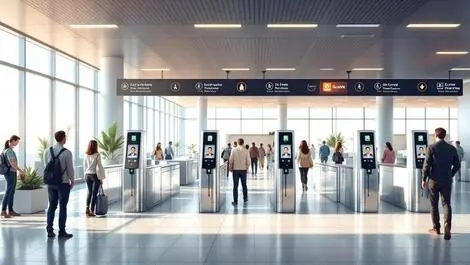
More airports around Japan will soon be rolling out automated facial recognition gates for travellers passing through immigration and passport control.
Along with the viral potential of its popular filters, FaceApp has of late, generated a huge wave of media attention amid concerns about online privacy.
The UK Information Commissioner warns that live facial recognition technology poses significant privacy risks, urging strict adherence to data laws.
Australian facial biometrics and analytics organisation Vix Vizion has responded to user feedback and released an improved user interface.
Vix Vizion selected as solutions provider for South Australian government's gambling register, using facial recognition technology.
The New Zealand Community Trust is using facial recognition tech to help problem gamblers exclude themselves from gambling rooms.