

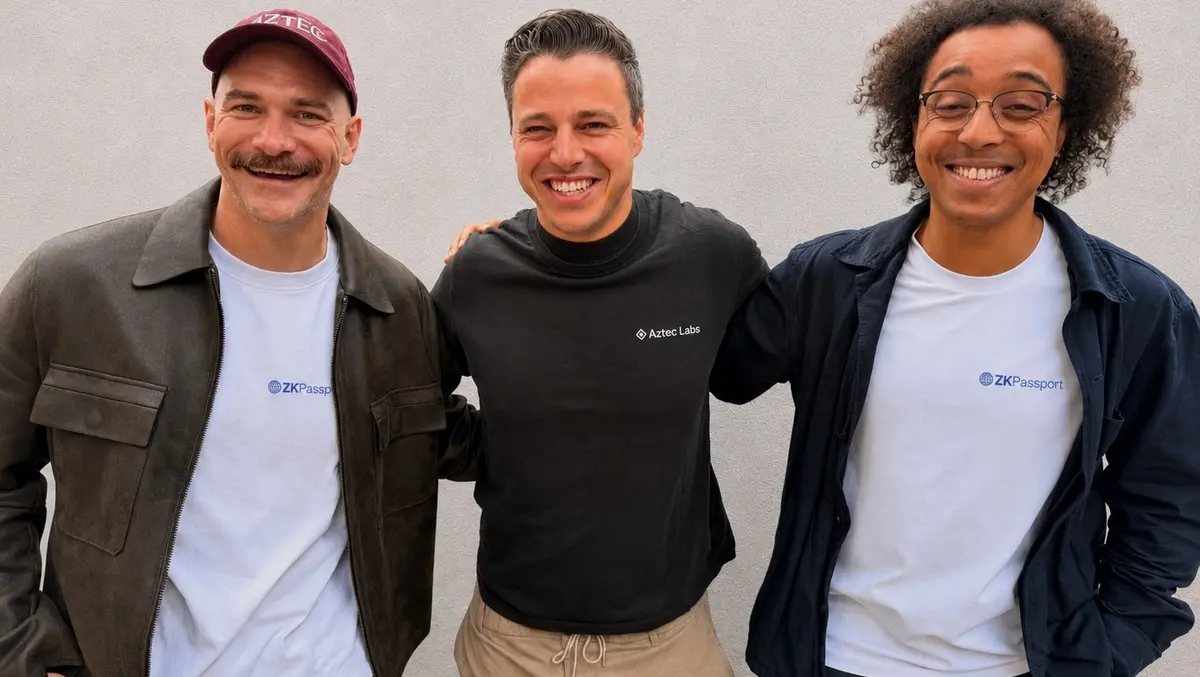
Aztec Labs acquires Obsidion for ZKPassport identity
Mon, 1st Jun 2026.webp)
Aztec Labs has acquired Obsidion, the team behind ZKPassport, bringing the product in-house as the identity layer for its privacy-focused stack.
ZKPassport is an identity verification protocol that lets users prove specific attributes from government documents without sending personal data to a centralised provider. It will remain open source and available for other teams to build on.
The deal comes as online platforms face growing pressure to verify age, nationality and other user attributes. That has increased scrutiny of existing systems, many of which require people to upload passport scans or other sensitive records to third-party services.
ZKPassport uses on-device checks through the NFC chips in passports and government IDs. Aztec Labs says it supports documents from more than 130 countries and lets users verify facts such as age, nationality, proof of humanity and sanctions compliance without disclosing the underlying personal data.
Obsidion co-founders Michael Elliot and Theo Madzou will join Aztec Labs as part of the transaction. They will continue working on ZKPassport while leading new consumer product development inside the company.
Aztec Labs says the protocol has already been used in live settings. During the Aztec Network token sale, more than 17,000 participants used ZKPassport to verify nationality and sanctions-related compliance. More than 30,000 people had previously used it to join the Aztec testnet validator set.
Hundreds of attendees across 11 Latin American countries also used the system at Devconnect to claim discounted tickets, suggesting Aztec Labs sees the product as proven beyond a limited pilot phase.
Data concerns
The acquisition comes amid broader concern over data exposure in digital identity checks. Aztec Labs pointed to figures showing 780 data compromises in the first quarter of 2026, affecting nearly 140 million people globally.
That has sharpened debate over whether regulators and online services can enforce identity rules without creating new stores of sensitive personal information. Privacy advocates and some technology companies argue that centralised identity databases create security and liability risks for both operators and users.
Aztec Labs is positioning ZKPassport as an alternative. Proofs generated through the system can be verified in a browser, on a server for non-blockchain uses, or on blockchain networks including the Aztec Network, Ethereum and other EVM-compatible chains.
Joe Andrews, chief executive officer of Aztec Labs, outlined the company's view of the product's role in online verification.
"The Obsidion team has built something rare: a privacy product that meets real-world verification requirements without exposing user data. Proving attributes without revealing personal data is what verification infrastructure should look like everywhere, especially with the growing desire from governments to implement age verification standards online," Andrews said.
Company expansion
The purchase also broadens Aztec Labs' reach beyond its roots in privacy technology tied to blockchain infrastructure. The company describes itself as a product studio built by some of the core team members behind the Aztec Network, a privacy-focused layer 2 blockchain on Ethereum.
Aztec Labs says it has more than 30 engineers and business staff focused on zero-knowledge cryptography and has raised USD $125 million to date, including a USD $100 million Series B backed by a16z crypto and Paradigm. Bringing ZKPassport in-house gives it a consumer-facing identity product with uses beyond blockchain transactions.
It will continue maintaining both the ZKPassport protocol and its iOS mobile app as open-source projects. The company also plans to build tools for outside developers and organisations that want to integrate the system into their own services.
For Obsidion, the deal places its technology inside a larger group already building products around privacy and cryptographic verification. Michael Elliot said the current market for identity checks leaves users with little control over how their personal data is handled.
"Every identity verification system built today requires users to surrender personal data to a centralised service and trust that it will never be misused or breached. That model has failed repeatedly, and regulatory frameworks are forcing the industry to find a better answer. ZKPassport solves this by letting users prove only what's required, without exposing the underlying personal data. Joining forces with Aztec Labs gives us the network, resources and strategic alignment to make private identity verification the default, while pursuing a much more ambitious product vision," Elliot said.