

.webp)
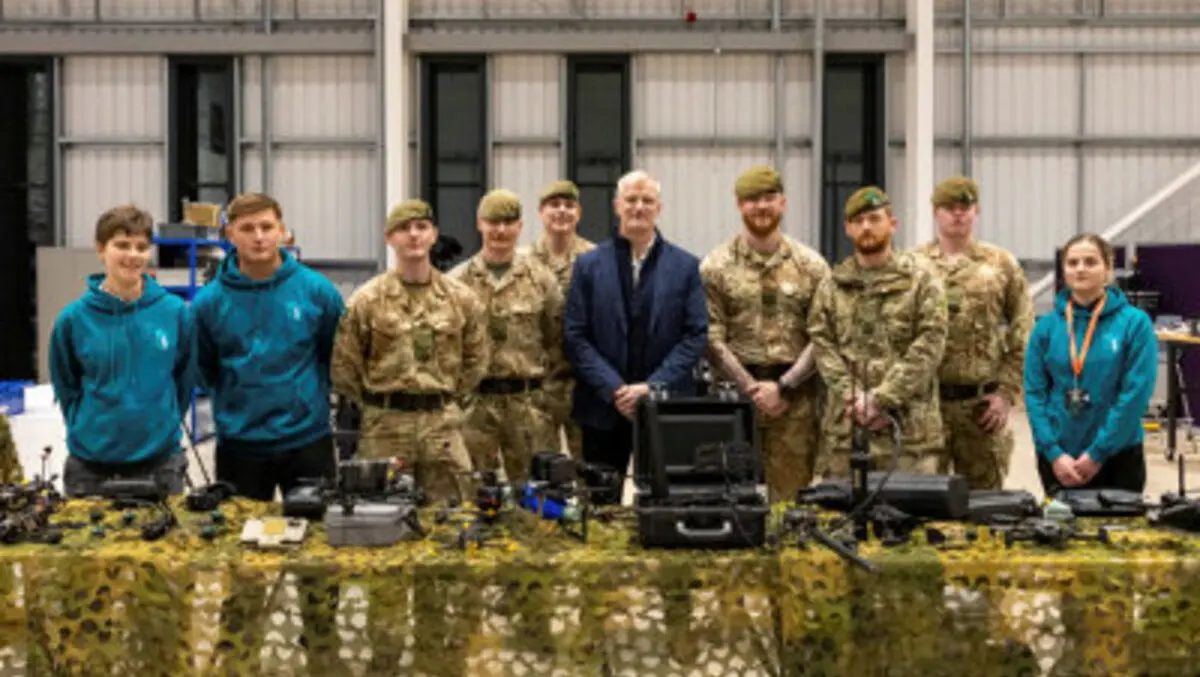
NMITE (New Model Institute for Technology and Engineering) has released further details regarding its new undergraduate autonomous robotics engineering degree, following a joint event hosted with the British Army at its Skylon Campus in Hereford.
The institute confirmed that the MEng (Hons) Integrated Engineering (Autonomous Robotics) will be a three-year programme, with the first intake scheduled for September 2026. NMITE has positioned the course to focus specifically on autonomous systems and drone technologies.
Al Carns MP, Minister for the Armed Forces, attended the event and delivered a speech alongside James Newby, NMITE President and CEO. Jesse Norman, Chair of NMITE, and Professor Alexandru Stancu, Academic Lead for the programme, also took part.
Students at NMITE demonstrated "real-world autonomous systems, drone technologies and robotics", according to the institute. The British Army brought drone demonstrations through members of its Experimentation and Trials Group.
Army partnership
Brigadier Mike Cornwell, Head of Future Force Development at Army Command, represented the Army at the campus event. NMITE said members of the Army's Experimentation and Trials Group attended and could consider the degree in future.
NMITE linked the new course to defence and security needs as well as regional skills goals. It also placed the degree within a wider UK debate about training pathways for engineering and technology roles, and about the balance between academic study and workplace experience.
"This degree reflects the scale of the opportunity in front of us - to equip the next generation of engineers with skills that matter now, and to quickly deliver positive impacts in terms of skills, defence and a security capability and regional growth. The fact that we expect many local young people to take on the degree and build their futures with us, is incredibly exciting," said James Newby, President and Chief Executive Officer, NMITE.
Curriculum design
NMITE said it built the degree around its hands-on teaching model. The institute described the curriculum as combining engineering fundamentals with practical work in autonomous systems.
"The curriculum has been designed from the ground up to combine rigorous engineering fundamentals with hands-on experience in autonomous systems, ensuring students engage with the technologies and challenges facing the country today. I am incredibly excited to be involved and can't wait to start working with students on this exciting project," said Professor Alexandru (Alex) Stancu, Academic Lead for this degree, NMITE.
NMITE said the degree will lead to a Master's in Engineering in three years. Many established UK engineering programmes take four years for an integrated master's degree.
The institute said the course will include a specialised focus on drone technologies. It also said it will address the "dual-use potential" of drones, with applications across civilian and defence settings.
Industry links
NMITE said it expects learners on the programme to engage with local employers and defence and security suppliers. It cited Hereford-based Level Peaks as an example of an organisation involved with the institute.
"We have a long-standing relationship with NMITE and strongly believe in the value the university brings to the local area and the industries we operate within. Our partnership is built on meaningful collaboration - from investing in students through financial support, to sharing knowledge, expertise, and direct industry insight. As NMITE enters the next stage of its journey with the introduction of the MEng degrees in Autonomous Robotics, it clearly demonstrates the institute's modern, forward-thinking, and industry-relevant academic approach. This development is particularly exciting and will prove invaluable to the industry, creating new opportunities for collaboration while significantly enhancing student futures," said a spokesperson, Level Peaks.
NMITE also highlighted the presence of Ollie Holt, who graduated from NMITE's Integrated Engineering programme and now works at a Hereford-based drones company. The institute positioned his role as an example of a pathway from its courses into local technology employment.
NMITE operates from a purpose-built campus of 4,941 square metres and employs 60 staff, according to figures provided by the institute. It said more than 220 students have enrolled so far and it has delivered over 90 modules. NMITE also reported partnerships with more than 80 industry partners across different sectors.
NMITE (New Model Institute for Technology and Engineering) has announced further expansion of its curriculum following the granting of new degree-awarding powers by the Office for Students in 2022.
The institute has steadily broadened its course portfolio in recent years to include construction management and mechanical engineering degrees. NMITE confirmed it will continue to prioritise the development of accelerated pathways for engineering qualifications, allowing students to complete their studies more efficiently than via traditional routes.
The new Autonomous Robotics degree is scheduled to welcome its first cohort of students in September 2026.