Incident Response stories
Analysts at Littlefish could assess threats in seconds or minutes as its new software trims alert backlogs without replacing human judgement.
Identity-led access, faster fault finding and simpler hardware swaps are aimed at reducing workload for overstretched IT teams and MSPs.
Ransomware recovery is worsening as most organisations lack backup storage that cannot be altered or deleted, Omdia says.
The deal gives A-LIGN customers direct access to penetration testing and red teaming as firms seek fewer vendors for cyber compliance and defence.
Customers can now buy bundled network design and AI threat detection as the firms aim to widen reach in enterprise and government markets.
A USD $1 billion push will widen subsidised access to AI cyber tools for utilities, local governments and banks with thin security teams.
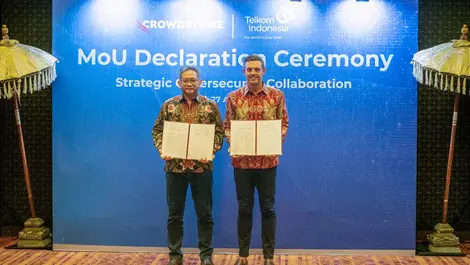
Indonesia's businesses and public bodies could gain stronger protection as Telkom adopts CrowdStrike's Falcon platform and co-develops AI security services.
Forrester said perimeter-only defences no longer suffice as industrial networks become more tightly tied to enterprise IT and cloud services.
Security teams could get clearer visibility into compiled software, as RevEng.AI's new models aim to spot risks without source code.
Trusted employees and AI agents are now seen as prime insider risks, with deepfake fraud and hidden access gaps worsening the threat.
Analysts will save hours of manual research as structured intelligence on threat actors, malware and CVEs is added to Searchlight Threat.
Integrated automation aims to cut identity-breach recovery from days to hours, reducing manual work for security teams during outages.
The hire signals rising pressure on security teams as AI expands attack surfaces across hybrid cloud systems and customer data flows.
AI-enabled attacks have surged 89% year on year, prompting Fujitsu to shift customers towards continuous cyber resilience and faster threat response.
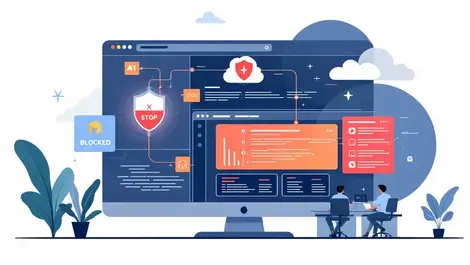
Security teams can now trace blocked cloud requests faster, as Google Cloud rolls out policy intelligence for VPC Service Controls to cut investigation time.
Security teams are under pressure to triage alert floods faster, as the new agent links Proofpoint data with OpenAI reasoning.
AI-enabled attacks are accelerating, with CrowdStrike and NVIDIA aiming to help security teams counter them in seconds.
The new products aim to help security teams detect AI-driven attacks, stop poisoned code and control autonomous agent access across systems.
As firms spread across cloud and on-premises systems, a combined security and compliance model is becoming harder to ignore for auditors and boards.
Falcon will be sold through Claude Marketplace and linked to Codex agents, as CrowdStrike widens its reach across enterprise AI buyers.