Social Engineering stories

The total number of certificates using lookalike domains is more than 400% greater than the number of authentic retail domains.
Across all countries surveyed, prioritisation was identified as the biggest organisational cybersecurity challenge (20%).
As deepfakes become more convincing, experts turn to deep learning to detect AI-manipulated videos, countering the rising threat of misinformation.
Trustwave's 2019 Global Security Report reveals a sharp rise in focused cyber threats and highlights the ongoing evolution of both attacks and defences.
The fund will seek out startups that are aligned with Okta's vision of enabling any organisation to use any technology.
As these threats continue to grow in volume and sophistication, it is imperative that organisations implement a people-centric security approach.
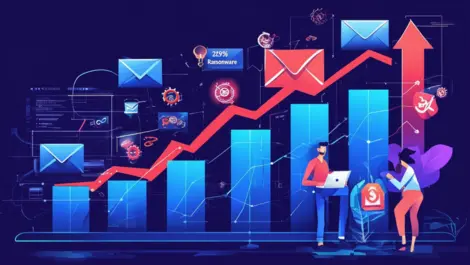
Proofpoint's 2018 report reveals a surge in social engineering attacks, with phishing incidents up 9% and credential compromises rising 70% since 2017.
Proofpoint researchers have looked ahead at the trends and events likely to shape the threat landscape in the year to come.
The 2018 CrowdStrike Services Cyber Intrusion Casebook reveals IR strategies, lessons learned, and trends derived from more than 200 cases.
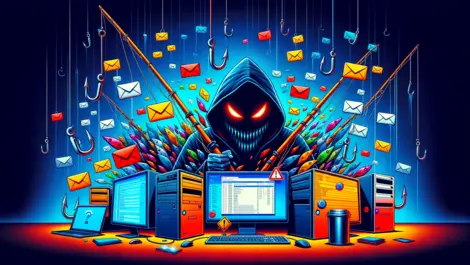
Phishing attacks or social-engineering attacks are on the rise, where cybercriminals trick people into divulging details and participating in scams.
Individual contributors and lower level management account for nearly two thirds (60%) of highly targeted attacks within an organisation.
Alongside the migration to the cloud has been the rise of application programming interfaces (APIs) and artificial intelligence (AI).
It can take hackers less than an hour to steal data from an organisation, and most of the time their targets don't even detect the attacks.
In a recent report by Dell EMC, it was discovered that data-loss incidents cost Singapore organisations an average of US$1.4 million over 12 months.
Proofpoint says commonly targeted accounts are not necessarily people who are known or actively tracked by the security team.
Weak account settings and careless clicks can expose personal data, let criminals impersonate you and compromise linked services.
Simple checks can stop account takeovers and phishing, from stronger passwords and two-factor authentication to encrypted connections and attachments.
The Australian Taxation Office (ATO) recently warned of a sophisticated phone scam, manipulating Australians for a reported $830,000 in November.
Auckland researcher seeks 1000 Kiwi internet users to assist in a project to understand human risk factors in cybersecurity. #CybersecurityNZ.
Criminals will exploit known vulnerabilities; social engineering will craft sophisticated networks; supply chain targeting will target third parties..