

Italy & Poland power Europe's shifting cyber market
Mon, 2nd Feb 2026.webp)
Europe's cybersecurity market grew 5.2% year on year in 2025, with expansion in Southern and Eastern Europe offsetting a weaker finish in the region's two largest markets.
Market intelligence firm CONTEXT said the year split into two distinct halves. The market showed momentum in the first half, then weakened later in the year. The third quarter ended down 3%, followed by a further decline of 1.8% in the fourth quarter.
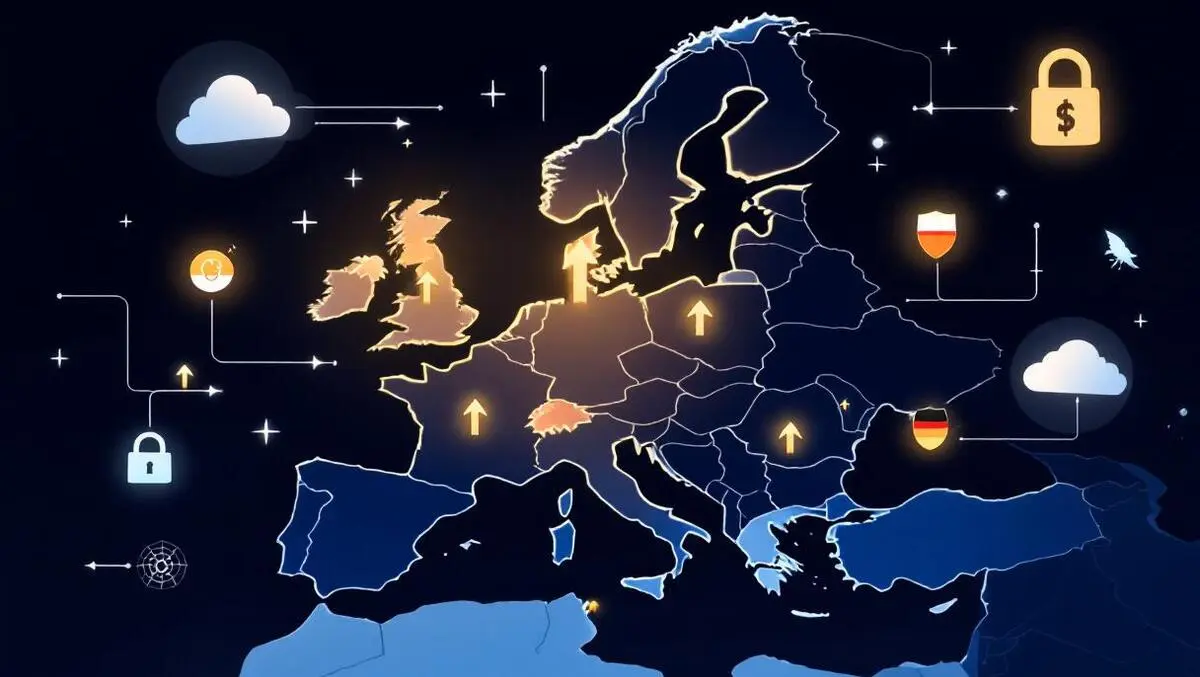
The pattern reflected contrasting national performances across the region. Spain, Italy and Poland delivered some of the fastest growth rates in cybersecurity spending, while the UK and Germany posted declines late in the year.
"Despite a subdued finish to the year, Europe's cybersecurity market showed real resilience in 2025," said Joe Turner, Global Director of Research, CONTEXT. "What stood out was how investment priorities shifted. Growth did not disappear, it simply moved to different countries and different security domains."
Shifting geographies
CONTEXT highlighted Southern and Eastern Europe as the strongest growth engines during 2025. Spain recorded a 20% increase in cybersecurity spend, while Italy grew by 15%. Poland expanded by 59% year on year.
By contrast, the UK market declined by 15% in the fourth quarter. Germany fell by 7% in the same period. CONTEXT said the size of the UK and German markets meant their late-year weakness weighed on the overall European result.
Italy's performance, combined with stagnation in the UK and Germany, changed the market's balance. CONTEXT said Italy reached double-digit market share for the first time. It ended 2025 with 10.1% of total European cybersecurity sales.
The differences between national markets also appeared in segment trends, with some categories holding up better than others through the second half.
Network security
Network security remained the largest category in Europe and grew 7% across the region during 2025, according to CONTEXT. It posted a broadly flat fourth quarter at the European level, despite sharper growth in some countries.
Spain and Italy recorded pronounced increases in network security spending. CONTEXT reported growth of 34% in Spain and 26% in Italy. It linked the demand to hybrid cloud migration projects.
Regulatory effects
Beyond the standout performance of data security, two other segments recorded solid gains across Europe in 2025: infrastructure protection grew by 10%, while identity and access management (IAM) rose by 9%. According to CONTEXT, these spending patterns were heavily influenced by the regulatory requirements of the NIS2 directive and the ongoing transition towards zero-trust security models. These factors were particularly prominent in the UK, France, Germany, and Italy.
As these segments are typically integrated with core IT operations and governance, they are often prioritised when organisations review their compliance and overall security posture. This alignment frequently results in steadier investment levels compared to more discretionary projects, especially during periods when IT budgets are under pressure.
Data security
According to data from CONTEXT, data security emerged as the top-performing market segment in 2025, achieving a 13% growth rate across Europe. Poland spearheaded this regional surge with a remarkable 168% increase in spending, a trend largely fuelled by targeted national funding programmes. Germany also demonstrated solid performance within the sector, recording a growth of 15%.
Experts at CONTEXT attributed this robust performance to tightening regulatory expectations, particularly regarding data encryption and classification standards. Furthermore, the rise of artificial intelligence played a pivotal role; organisations significantly ramped up their investments to protect the sensitive datasets essential for training AI models.
"Data has become the foundation of both regulatory compliance and AI development," said Turner. "As organisations invest more heavily in internal AI models, protecting the data that fuels them has become mission critical. Losing control of that data does not just create compliance risk, it undermines the value of AI investment itself."
The emphasis on data security adds another layer to a market already shaped by compliance deadlines and cloud-related change. Spending shifts also suggest buyers weigh immediate risk, audit requirements and longer-term digital projects differently across countries.
CONTEXT described itself as a provider of market intelligence and analytics for the global technology industry. It said its systems track more than GBP £200 billion in annual technology sales transactions, with a team of more than 400 professionals operating in more than 35 countries.
CONTEXT said it expects investment priorities to continue moving between countries and security domains as regulatory expectations evolve and organisations expand the use of AI in internal systems.